Language Connects People - Why Integration Courses Matter
Due to planned changes, fewer people will have access to integration courses in Germany. While there may be an amended format available in the future, the allocation of courses has already been suspended for some groups, and in some cases links to online learning materials have been offered instead.
This is surprising to me.
For people who are new to Germany, integration courses are exactly what their name suggests: a way to help people integrate into society. They don’t just teach the language, but also help people understand cultural norms, humour, history and laws. They also prepare participants for the formal language exams that are often required to access the job market.
As a teacher on these courses, I witness first-hand the development that takes place when accompanying a group from A1 level through to B1 level at the end of the programme.
Participants often begin with a very basic understanding – sometimes just individual words – and gradually develop the ability to communicate in a wide range of situations. This prepares them not only for everyday life, but also for professional contexts.
Over time I see participants become more comfortable expressing themselves and taking part in discussions. The group itself often becomes a small community. We organise trips together – for example to museums – and explore aspects of German history and culture beyond the classroom.
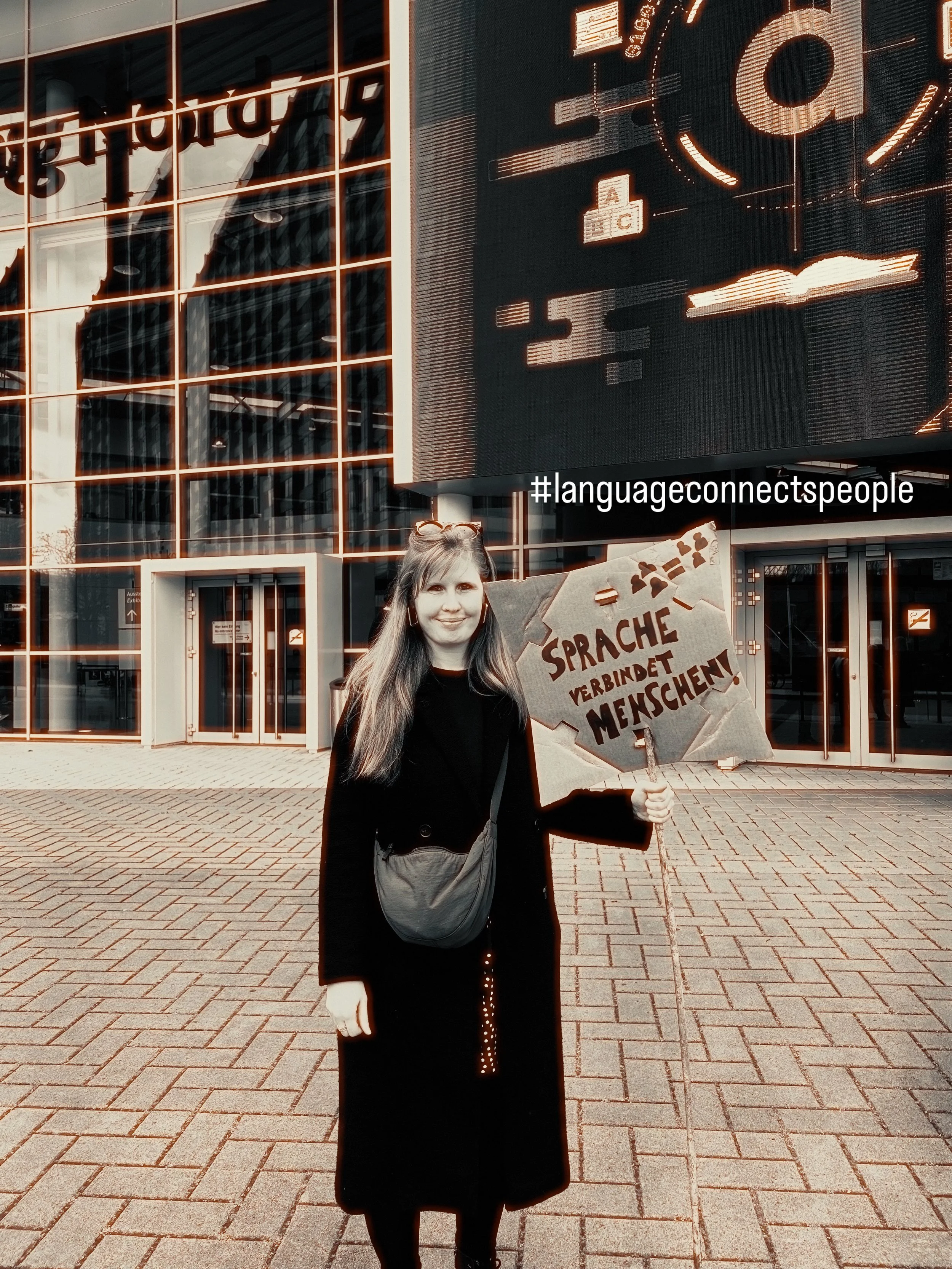
My belief that these courses help people communicate in an increasingly divided society is the reason behind the poster I made for a demonstration today during the Didacta education trade fair.
“Sprache verbindet Menschen” – Language connects people.
As a language teacher, that is something I stand strongly behind. And I really hope that the value of these courses continues to be recognised, and that they receive the support needed for these courses to continue.